 School Matters
Collecting PSLE results: a parent’s guide
A practical guide for Singapore parents collecting PSLE results: manage expectations, respond with care and plan secondary-school choices with your child.
Your child walks towards you with their results slip. Before you have properly read the numbers, they may already be watching your face.
For parents, PSLE results day brings several questions at once. Did the effort pay off? Which schools are possible now? What happens if the result is different from what everyone expected?
For your child, the immediate question may be simpler: are you happy with me?
There are practical decisions ahead, but there is time to approach them carefully. The first job is to help your child get through the day feeling supported.
For families collecting results in 2026, SEAB currently lists 24–25 November as the tentative release window, with the confirmed date to be announced separately. Follow the latest official announcement and your primary school’s collection instructions. Check SEAB’s examination dates.
Managing expectations before results day
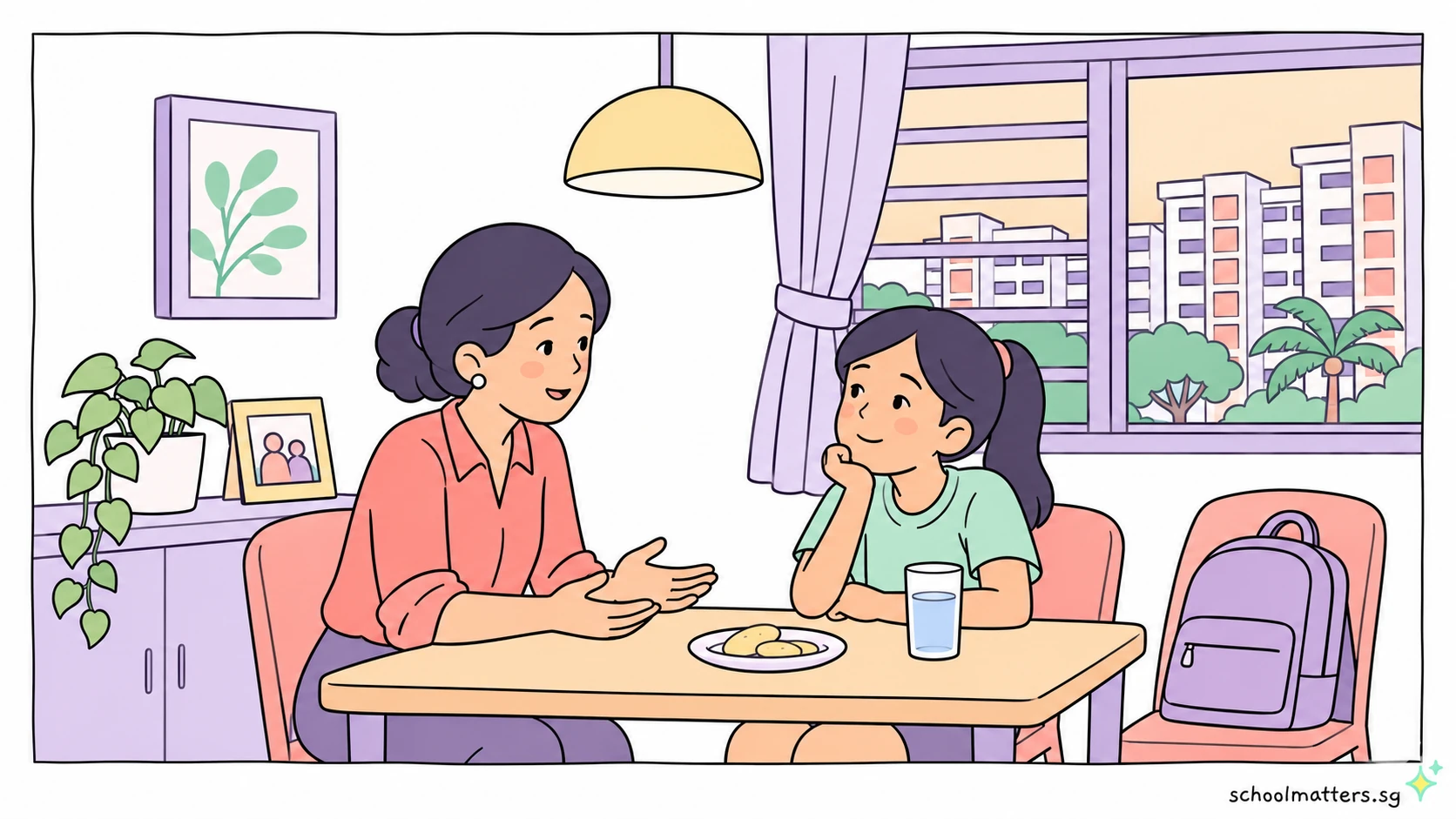
The waiting can be harder than expected. Some children talk constantly about possible scores. Others avoid the subject entirely. A child who seems relaxed might still be nervous; a quiet child might simply prefer to process things privately.
You do not need to turn the evening before into a serious family discussion. Have dinner, check the school’s instructions and make the practical arrangements. If your child wants to talk, listen. If they would rather watch something and go to bed, let the evening stay ordinary.
It also helps to examine your own expectations. Perhaps you have pictured a particular school for months. Perhaps the prelim results suggested a certain outcome. Those hopes are understandable, but leave room for the actual result.
Avoid promises such as “You’ll definitely get in” or predictions about the score. A steadier message is: “When we have the results, we’ll look at the options together.”
Collecting the results
On collection day, follow your school’s reporting time, venue and arrangements for accompanying parents. Schools may organise the session differently, so another family’s experience is not a reliable timetable. Students receive their result slip and examination certificate through their school when results are released. SEAB explains the results documents.
Leave enough time for the journey. Bring some water and keep the rest of the day reasonably flexible. Ask your child whether they would like you nearby when they look at the results.
Give your child a reassuring first reaction
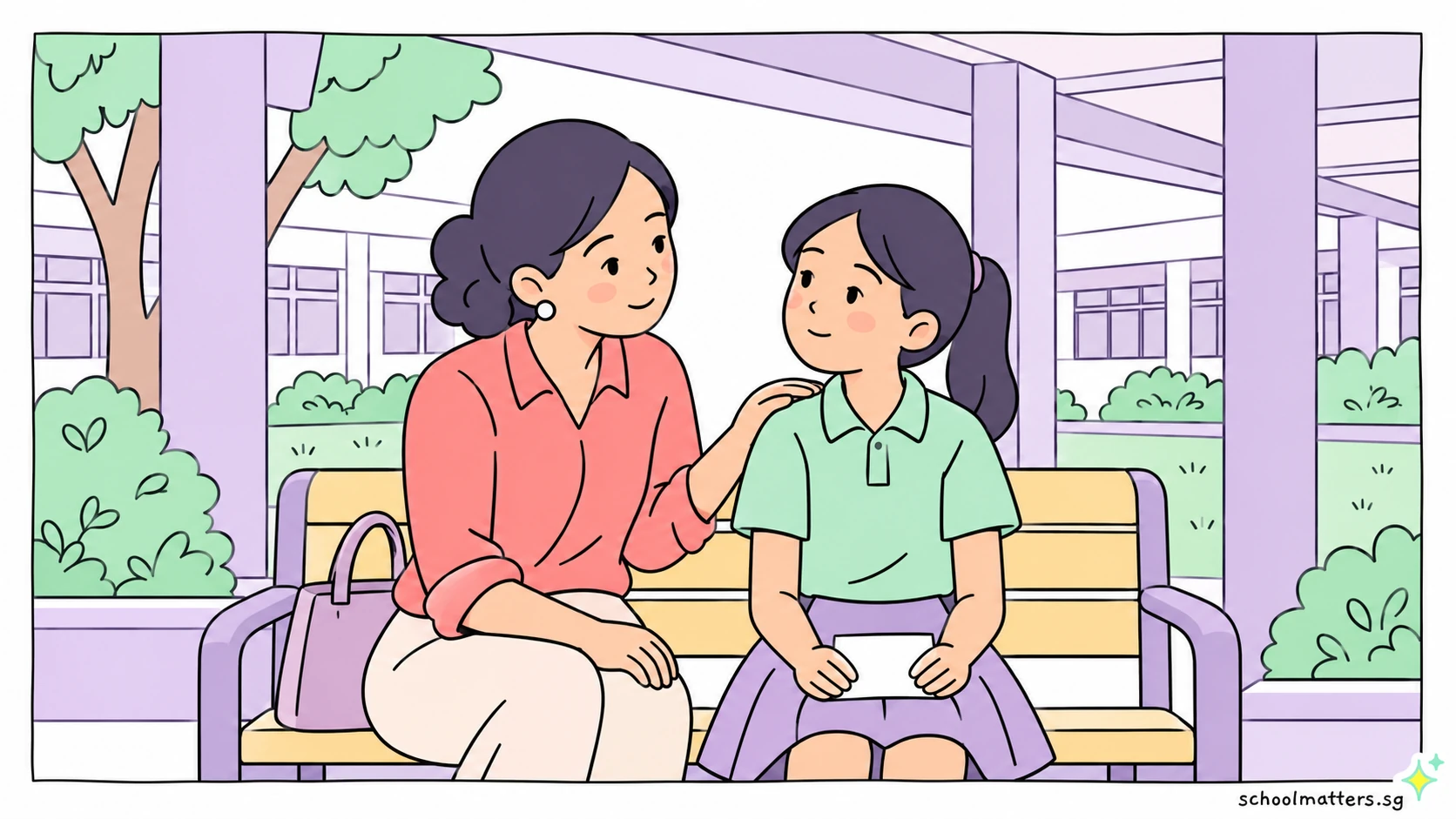
When the slip is finally in front of you, pause before analysing it.
If the result is better than expected, enjoy the moment. Your child does not need an immediate discussion about whether they should now aim for a more selective school.
If the result is around expectations, acknowledge what they have done. Resist turning straight to the subject that could have been one AL better.
If the result is disappointing, acknowledge that too. “Don’t be sad” can be difficult to hear when a child is already upset. Try something simple:
- Better than expected: “You look so happy. I’m happy for you.”
- Around expectations: “You’ve worked through a big year. How are you feeling?”
- Worse than hoped: “I know you wanted a different result. We’ll work through the choices together.”
There is no perfect sentence. What matters is that your child feels able to celebrate, feel disappointed or take some time without having to manage your reaction as well.
Parents can feel disappointed too. If you need to talk through those feelings, choose another adult and a private moment. Your child may already be struggling with their own expectations.
Then come the messages.
Relatives want an update. Class chats become busy. Someone asks what your child scored before you have even left school.
You can wait. Ask your child before sharing their score or a photograph of the slip. “We’ve collected the results and are taking some time together” is enough.
What to do next
Once everyone has had a little breathing space, the next stage becomes more manageable.
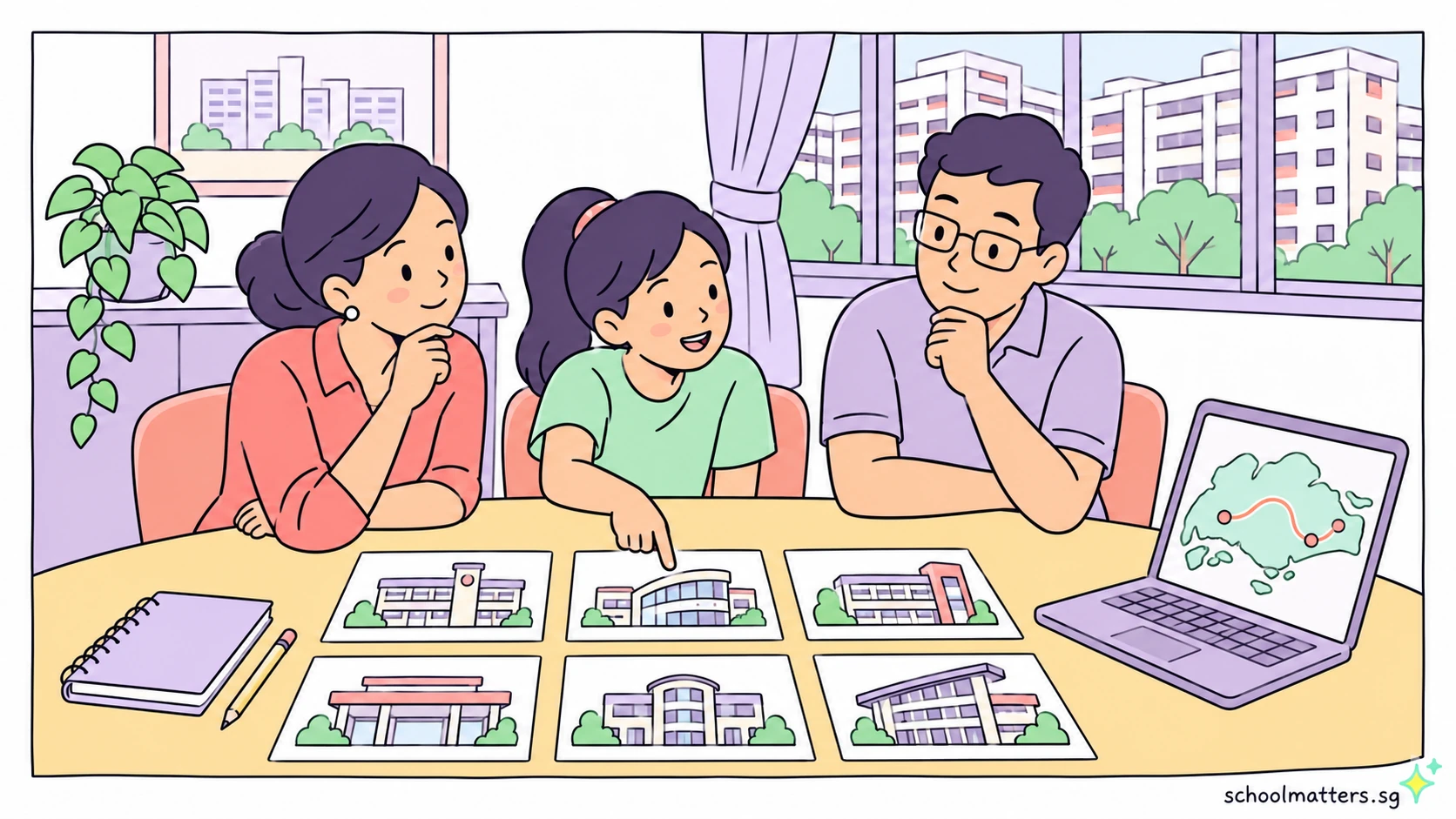
- Understand the result and eligibility. Read the subject grades alongside the total score and the school’s posting information. School Matters SG’s PSLE scoring guide can help explain the AL system. Under Full Subject-Based Banding, Posting Groups guide admission and starting subject levels; students can take subjects at different levels according to eligibility and subsequent progress. Read the Full SBB explanation.
- Build the school shortlist together. Ask what your child liked about schools they visited, which activities interest them and where they could imagine settling in. Compare the learning environment, available support and daily journey. The questions in Open House Theatre can help you look beyond the presentation, while Cross-Island Commute Math offers a useful reminder to account for travel time.
- Use all six choices thoughtfully. MOE encourages families to include two or three schools where the child’s PSLE score is better than the schools’ previous cut-off points. Rank schools in your actual order of preference and remember that past cut-offs can change. Every school on the list should be somewhere your family has seriously considered. See MOE’s guidance on choosing a secondary school.
- Check the submission instructions and deadline early. Read the current S1 posting information supplied by the school, prepare your choices and leave time to review them before submitting. Save the confirmation and note when to check for posting results.
If your child has been admitted through DSA-Sec, follow the allocation instructions carefully. Students admitted through DSA-Sec do not participate in the regular S1 Posting Exercise and are expected to honour their school and talent-area commitment. Read the DSA-Sec commitment guidance.
After the choices are submitted, give your child room to enjoy the holidays. There will be practical preparations for Secondary 1, but they have also finished six years of primary school. That deserves recognition whatever appears on the results slip.
Go for the meal you planned. Let them meet their friends. Keep talking about things other than schools.
The score matters for the next set of choices. Your child also needs to know that they can bring you an outcome they did not want and still find you beside them.